
The Hidden Connection Between Insulin Resistance, Fatty Liver and Ayurveda
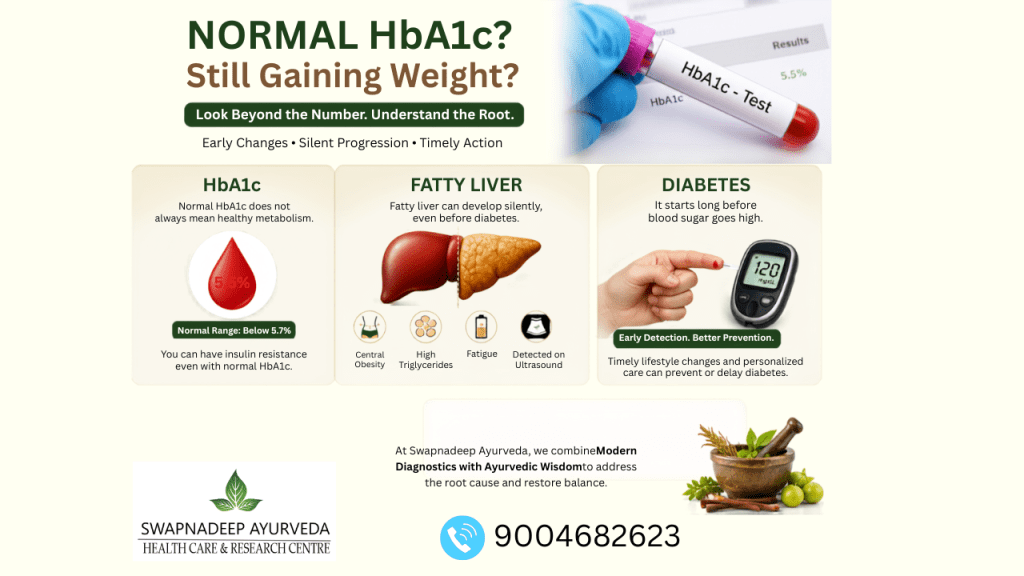
“Doctor, my HbA1c is 5.5%. My sugar is normal. Then why am I gaining weight every year?”
This is one of the most common questions we hear at Swapnadeep Ayurveda Bhavan. Many people believe that if their HbA1c is normal, their metabolism is healthy. Unfortunately, this is not always true.
Weight gain, increasing waist size, persistent fatigue and even fatty liver can develop years before diabetes is diagnosed. Understanding these early warning signs gives us an opportunity to intervene before long-term complications develop.
The Modern Perspective
HbA1c measures the average blood glucose over the previous 2–3 months. It is an excellent tool for diagnosing and monitoring diabetes, but it is not designed to detect every stage of metabolic dysfunction.
Many individuals develop insulin resistance long before HbA1c becomes abnormal.
In insulin resistance:
- The body’s cells respond less effectively to insulin.
- The pancreas produces more insulin to keep blood sugar within the normal range.
- Blood glucose may remain normal for years.
- During this period, the body may store more fat, especially around the abdomen and liver.
As a result, people may notice:
- Gradual weight gain
- Increased waist circumference
- Difficulty losing weight
- Fatigue after meals
- Elevated triglycerides
- Low HDL cholesterol
- Fatty liver on ultrasound
Even though the HbA1c is still normal, the underlying metabolic process may already have begun.
Where Fatty Liver Fits In
One of the earliest organs affected by insulin resistance is the liver. Excess calories, sedentary lifestyle and metabolic dysfunction can cause fat to accumulate inside liver cells, leading to non-alcoholic fatty liver disease (NAFLD) or metabolic dysfunction-associated steatotic liver disease (MASLD).
Many patients are surprised to learn that they can have:
- Normal HbA1c
- Normal SGPT (ALT)
- No symptoms
…and yet have fatty liver visible on ultrasound.
This is why a normal blood report should never be interpreted in isolation.
The Ayurvedic Perspective
Ayurveda views health as the balance of Agni (digestive and metabolic capacity), Doshas, Dhatus and Mala.
When Agni becomes impaired and unhealthy dietary and lifestyle habits continue over time, Ama (metabolic by-products) may accumulate and disturb normal tissue metabolism, including Meda Dhatu (fat tissue).
मेदोवृद्धिः शरीरस्य गौरवं आलस्यमेव च।
“Increase in Meda (adipose tissue) leads to heaviness of the body and lethargy.”
Instead of focusing only on body weight, Ayurveda evaluates:
- Appetite and digestion
- Daily routine
- Sleep quality
- Physical activity
- Stress
- Prakriti (constitutional type)
- Vikriti (current imbalance)
This individualized assessment helps identify the root causes that contribute to metabolic disorders.
Why a Single Report Is Not Enough
At Swapnadeep Ayurveda Bhavan, we believe that good clinical care begins with understanding the whole patient, not just one laboratory value.
सन्तर्पणोत्था रोगाः। Many diseases arise from over-nourishment and excess . Today’s lifestyle is characterized by: Excess calories , Reduced physical activity , Poor sleep ,chronic stress.
These factors contribute to obesity, fatty liver, insulin resistance, and metabolic syndrome—conditions that Ayurveda broadly associates with Santarpana (over-nutrition).
Hence Our assessment includes:
- Detailed medical history
- Weight and waist circumference
- Blood pressure
- HbA1c and blood sugar
- Lipid profile
- Liver function tests
- Ultrasound or FibroScan findings (when available)
- Lifestyle assessment
- Ayurvedic examination
This integrated approach allows us to identify early metabolic changes before they progress to diabetes, advanced fatty liver or cardiovascular disease.
One of the principles we follow is:
स्वस्थस्य स्वास्थ्य रक्षणम्
आतुरस्य विकार प्रशमनम् च।“The primary purpose of Ayurveda is to preserve the health of the healthy and to alleviate disease in those who are ill.”
We don’t treat reports. We treat the person behind the reports. Not every patient with weight gain requires the same treatment. Some may benefit primarily from lifestyle modification. Some may require structured dietary changes.
For selected patients, individualized Ayurvedic medicines and physician-supervised Panchakarma may be appropriate as part of a comprehensive treatment plan. Others may need referral or co-management with specialists. Our recommendations are based on clinical findings, investigations and realistic treatment goals, not a one-size-fits-all approach.
“We don’t wait for diabetes to appear. We look for the early signs of metabolic imbalance. By combining classical Ayurvedic principles with careful interpretation of modern laboratory tests and imaging, we help patients understand where Ayurveda can contribute, where lifestyle change is essential, and when referral or additional medical care is needed.”
— Dr. Swapnil Chaudhari, BAMS, MD (Kayachikitsa)


 Best Ayurvedic Doctor & Panchakarma Centre in Kharghar – Swapnadeep Ayurveda